
Mast Climbing Work Platform
P1500Single Mast Climbing Work Platform
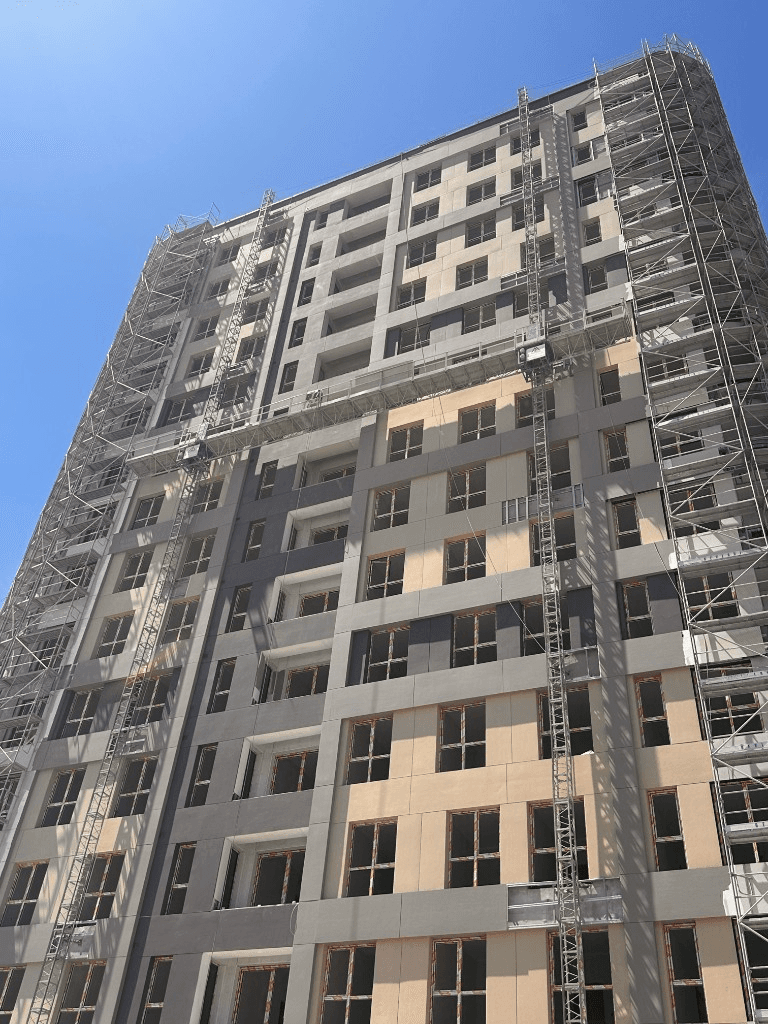
Single-mast climbing work platform for facade installation, maintenance and repair on high-rise buildings.
- Capacity
- 1500 kg
- Speed
- 8 m/min
- Maximum Height
- 250 m
- Maximum Width
- 10 m

Capacity
1500 kg
Speed
8 m/min
Maximum Height
250 m
Maximum Width
10 m
Technical Drawings
Powerful and Flexible Single-Mast Facade Access
P1500 is a single-mast climbing work platform developed for facade applications on high-rise buildings. With a loading capacity of 1,500 kg, a maximum platform width of 10 metres and a maximum working height of 250 metres, it provides safe and efficient access for facade installation, maintenance and repair operations.
Technical Specifications
- Capacity
- 1500 kg
- Speed
- 8 m/min
- Maximum Height
- 250 m
- Maximum Width
- 10 m
- Motor Power
- 2 x 2.2 kW
- Mast Section Thickness
- 4 mm
- Mast Finish
- Galvanized
- Mast Height
- 1.5 m
- Mast Weight
- 65 kg
Technical specifications — P1500
| Specification | Value |
|---|---|
| Capacity | 1500 kg |
| Speed | 8 m/min |
| Maximum Height | 250 m |
| Maximum Width | 10 m |
| Motor Power | 2 x 2.2 kW |
| Mast Section Thickness | 4 mm |
| Mast Finish | Galvanized |
| Mast Height | 1.5 m |
| Mast Weight | 65 kg |
Key Features
Chassis
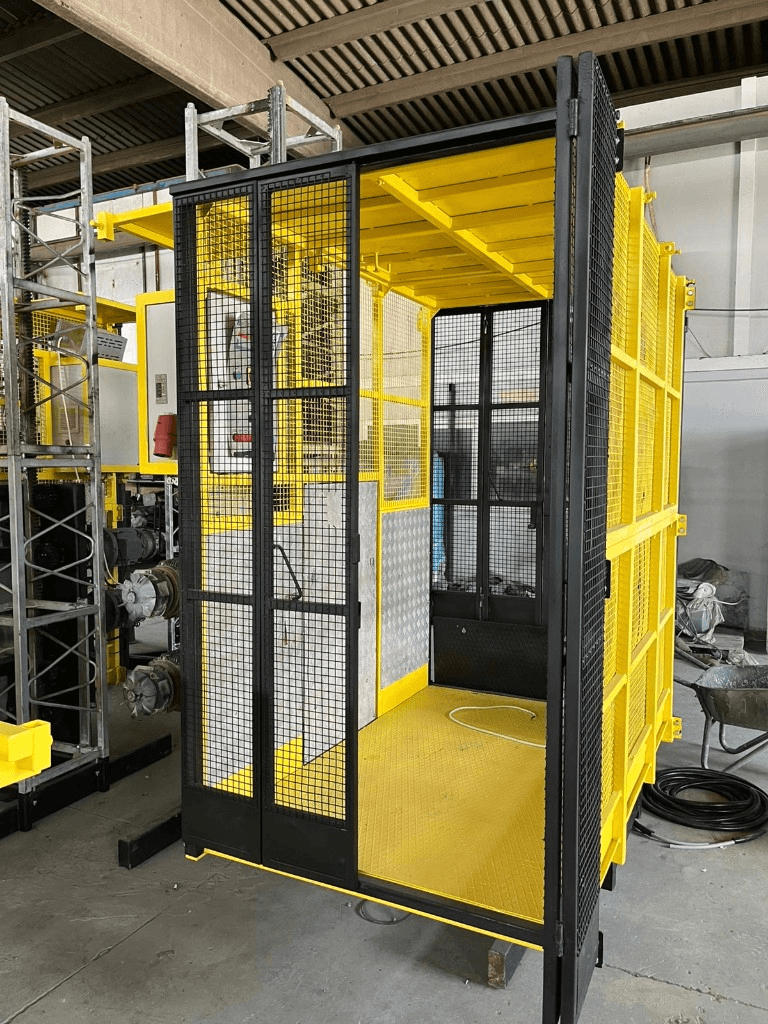
The steel chassis and integrated safety systems provide a secure operating structure.
Mast System
The masts are manufactured from 4 mm-thick galvanized steel for high durability and a long service life. Each mast section is 1.5 metres high and weighs 65 kg.
Electrical Cabinet
The PLC-controlled electrical system simplifies fault monitoring. System status and active safety information can be viewed through the operator display.
Compatible Mast Structure
The mast system is designed to be compatible with ALPMAKSAN personnel and material hoist products.
MTS
Monitor Your Machine with MTS
With the MTS Machine Tracking System, operating status, energy data and fault information from platforms and hoists can be monitored remotely through the mobile application and web interface.

Frequently asked questions
What is the load capacity of the P1500?
The P1500 Single Mast Climbing Work Platform has a catalogue load capacity of 1500 kg. The permitted load on a project follows the approved configuration and load chart.
How fast and how high does the P1500 go?
The P1500 is catalogued with a speed of 8 m/min and a maximum height of 250 m.
What is the maximum platform width of the P1500?
The catalogue maximum platform width of the P1500 is 10 m. The actual working length is planned from the facade drawing and configuration.
Is the P1500 CE certified?
Yes. The P 1500 and P 3000 models hold EC Type Examination Certificate CAC-M-242-1, issued by CAC Conformity Assessment Center under the 2006/42/EC Machinery Directive against EN 1495+A2 (valid until 07.04.2031).
Should I choose the P1500 or the P3000?
The P1500 is a single-mast platform (1,500 kg, max. 10 m width) and the P3000 a twin-mast platform (3,000 kg, max. 30 m width). The choice depends on working length, load position and site conditions.
Can the P1500 be monitored remotely with MTS?
Yes. ALPMAKSAN MTS (Machine Tracking System) is PLC-based; live machine status, energy data, alarms, service and inventory records are available on iOS, Android and the web.
Related technical articles
- Mast Climber Daily Inspection and Brake Test: A Pre-Use Checklist
What must be checked before a mast climbing work platform is used each day? Visual checks, start-up, brake test and test run per the P1500/P3000 manual.
Operation guides
- Mast Climber Dismantling, Transport and Storage: A Practical Guide
How is a mast climbing work platform dismantled, transported and stored? Dismantling order, loading for transport, crane relocation and storage checks.
Installation guides
- Mast Climbers in Hot Climates: Site Planning for UAE and Saudi Arabia
Planning a mast climbing work platform in the UAE or Saudi Arabia? Check operating temperature, sand, electrics, wind and the summer midday work ban.
Technical guides
- How Is a Mast Climbing Work Platform Installed? Step-by-Step Overview
How is a mast climbing work platform installed? Base frame, platform, mast sections, wall ties, limit checks and test run, from the P1500/P3000 manual.
Installation guides
- Mast Climbing Work Platform Maintenance Schedule: Weekly to Two-Yearly
What maintenance does a mast climbing work platform need? A weekly, monthly, quarterly, annual and two-yearly schedule based on the P1500/P3000 manual.
Maintenance guides
- Mast Climber Power Supply: Voltage, Cable Size and Earthing
What power supply does a mast climbing work platform need? Voltage, kVA, breaker, cable cross-section by distance and earthing for the P1500 and P3000.
Technical guides
- Mast Climber Safety Devices and Emergency Lowering Explained
Which safety devices does a mast climbing work platform have, and how is it lowered after power failure? Brakes, limits and manual lowering.
Safety guides
- Mast Climber Wear Limits and Parachute Brake Replacement
When must mast climber parts be replaced? Pinion, rack and guide wheel wear limits and the parachute brake service life, from the P1500/P3000 manual.
Maintenance guides
- How to Move Workers and Materials on a High-Rise Construction Site
How do you move workers and materials on a high-rise site? Compare stairs, cranes, construction hoists and mast climbers, with H1500 and H2000 data.
Site logistics guides
- Mast Climbing Platform Site Preparation Checklist
Before a mast climbing work platform arrives, confirm ground conditions, tie-in points, power supply, laydown and crane access, and the real deck load.
Technical
- MCWP Tie-In Spacing: What Site Teams Should Confirm Early
MCWP tie-in spacing comes from manufacturer documentation and a qualified building review. Here is what site teams should confirm before delivery.
Technical
- MTS Remote Monitoring for Mast Climbing Platforms and Construction Hoists
How ALPMAKSAN MTS remotely monitors mast climbing platforms and construction hoists: live machine status, energy data, alarms, service records and reports.
Technical
- Buy or Rent a Mast Climbing Work Platform? A Cost Comparison Guide
Compare buying and renting a mast climbing work platform using utilisation, transport, installation, maintenance, storage and residual value.
Mast climbing work platform guides
- Mast Climber vs Scaffolding vs Suspended Platform: Which One Fits?
Looking for an alternative to scaffolding? Compare mast climbers, suspended platforms and scaffolding by load, height, speed and work sequence.
Mast climbing work platform guides
- Does a 3,000 kg Mast Climber Carry 3,000 kg in Every Configuration?
Understand how mast climber load capacity, platform configuration and load distribution work together before selecting or operating an MCWP.
Mast climbing work platform guides
- Mast Climbing Work Platform Prices: What Should a Purchase Quote Include?
What belongs in a mast climbing work platform quote: mast sections, ties, installation, transport, training and after-sales support, explained step by step.
Mast climbing work platform guides
- Single-Mast vs Twin-Mast MCWP: How to Choose the Right Configuration
Single-mast or twin-mast MCWP? Compare deck length, load position and site needs, plus P1500 (1,500 kg) vs P3000 (3,000 kg) catalogue data and FAQs.
Mast climbing work platform guides
- Buying a Used Mast Climbing Work Platform: Technical Inspection Checklist
Use this checklist to assess a used mast climbing work platform by identity, documentation, compatibility, maintenance history, condition and service support.
Mast climbing work platform guides
Let’s Define the Right Platform for Your Project
Let’s plan the right system according to project height, working dimensions, loading capacity and site conditions.